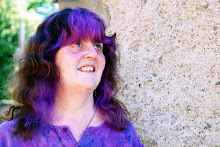
Caim in Thailand
The following is a summary of notes both Jacynth and I made in the form of a diary each day.
Thursday May 7th.
After travel, which ended with a 6 hr bus journey and a day for orientation, we had our first day in the camp. Our visit was hosted and organised by Deborah from Partners Relief and Development, an international Christian organisation with a base in Mae Sot. (www.partnersworld.org)
An hours drive from Mae Sot and past two Thai army checkpoints, the first sight of the camp was amazing - hundreds and hundreds of bamboo stilt houses - light brown, crowded up and down the foothills of a huge very green tree/palm covered mountain. We drove in along one-car width tracks - sometimes dirt and sometimes concrete. One of the boys from the hostel met us at the main gate to guide us - there are no road names and all the houses look very alike!
People in the camps are not allowed to go out - can't get work or further ed. in Thailand, so they do appreciate new faces and strange language. We had a really good translator today. We introduced ourselves with a map to show Scotland and Ireland. Learning Irish dance steps was our icebreaker - worked very well - even with 40 or so aged from 5-20. Most joined in very enthusiastically, especially the older boys.
The children also sang two worship songs for us in Karen. Many of the Karen are Christian. We danced the Gay Gordons (see picture) and finished with a lullaby and Deep Peace, to calm us for lunch - but spoiled the calm by giving out little gifts - pencils, balloons, pictures and postcards.
We were served with rice and several accompanying tasty dishes - eating by ourselves, the children and housemother eating afterwards. We had some conversations after lunch and then drove back to Mae Sot.
A swim and shower refreshed us ready for an evening meal in a little restaurant just outside our hotel. There, as well as delicious food, we had long conversations with an Australian journalist who spends much time in Karen villages in Burma and with a young Burmese man who is working in Mae Sot. He has a Thai ID card so can live in Mae Sot, but is registered in the camp and is there some of the time, so he can apply through UN to be resettled in another country.
Fri 8th May
Another hostel in this camp of 60,000 people. Again around 40 6-20 year olds for whom we did a similar programme. This group were very good singers so we added in a song from Africa, a round in Irish and our peace chant - Jacynth was very moved by having them join in it. In this hostel there was only a tiny concrete platform for dance. A circle dance to Gifts, one of our prayers, worked very well - with a couple of groups of volunteers. Interestingly, the older boys were the most keen to take part - also when we did the 2 hand reel and the Gay Gordons - the majority were happy to clap along and to laugh at the dancers - great fun had by all. We had a little more time to talk, via interpreter, to one teenage girl. She is 16 and has lived in the hostel for 3 years and has no family. It wasn't the right opportunity to probe more deeply. Partners workers have told us that the children don't tend to show negative emotions and what we saw was smiling, giggling and laughter - plus the odd yawn. When they sang for us they raised the roof, it was good to hear.
This hostel has no electricity so it's early to bed - dark before 8 - and up at 4 for an hour's worship, then the fetching of the days water supply by bucket, from a standpipe. On to cooking, washing by hand, harvesting bamboo, adding bamboo walls or re-roofing with fresh palm leaves -- many tasks to keep the houses fit to live in.
Today we worshipped at the Mission School church. Reaching it was an adventure. A steady climb up the mountain, weaving between bamboo houses, over boulders, tiny bamboo bridges, mud patches, past two corner shops, a pig pen and a ball court (a Karen game like volley ball, but with head and feet - not hands) - all the ground dried mud. What a luxury to find a stretch of concrete path!
Several small dogs wandered up the aisle, sniffed Heather's drum and wandered off again.
The church was quite large, with half walls topped with mosquito screens, a high roof, a low platform, and communion table and was very light/bright. There were flower arrangements especially for Mother's Day. Also on platform, the band instruments - drum kit, keyboards, guitars etc.
The service began at 11 and ended (with the 3-fold Amen!) at 1:30.
Everyone was in their Sunday best - a lot of sarongs, Karen shirts and some beautiful tops.
We were able to join in the opening choruses even though sung in the Karen language which included "This is the Day" and "From the rising of the sun" - also hymns later in service - 19th C staples, "Holy, Holy, Holy" and "Thou whose Almighty word" -those we didn't know we could hum along to. The singing was very hearty.
When church was over we really were ready for lunch, which was provided in the main schoolhouse. What a spread - plates of rice, delicious salty soup, tasty meat dishes, a veg one and a whole small fish. The headmaster, the pastor, one of the male teachers and our translator, also male, sat and ate with us. That gave us the opportunity to talk - an opportunity totally lacking at other meals. This room had open shelving laden with textbooks, which looked as if they’d seen much service. Jacynth was also interested to see several microscopes - taking her back to her scientific days. On the way out Jacynth photographed a pile of enormous Woks - they are cooking for upwards of 40 for every meal.
The journey downhill was accomplished safely.
Who did we meet?
History teacher. Been in camp 3 yrs. He talked about how lonely the children are, because they don’t have outside contact. He explained that, because there is little work, young men particularly start drinking and that leads to fights.
Our translator for the day - has completed Bible School. His father has a Thai passport and lives in Mae Sot, but he and his siblings must live in the camp and hope for resettlement or a change in the fortune of the Karen nation.
A 20 years old man. He has been in camp 3 years. His family is here. They all had to flee their village when it was destroyed, walking for days through the jungle, avoiding landmines and attacks by the Burma Army till they gained the relative safety of Thailand. He is studying engineering - year one of a three-year course. When finished he hopes to be resettled in one of the receiving countries – i.e. Canada, USA, Australia or Norway.
Mon 11th May - our day off.
We did in fact have an evening concert at a school in Mae Sot - a school for children of migrant workers. About 100 children, aged 5-20 were there. They enjoyed singing with us and for us as well as some of them dancing. When they sang, it was in age groups - the tiny ones did an action song, then the middles and finally the choir, which was very good. The headmistress, who trains the choir, wants some more church songs in English for the choir - another thing we'll be happy to follow up. They sing 4 part pieces. It was a pleasure to hear them.
Tue 12th May
Our last day in the camp.
Another strenuous climb, up steep parts with no steps and across muddy gullies brought us up to our destination where we were welcomed with hot coffee, very sweet.
At the end of our afternoon session, the children and young people came forward one by one to receive their gift and shook our hands - Karen style - thanking us and offering God's blessing.
We were relieved to be led down by a different route - much better, with steps on some steep parts. This brought us not to the gate, but to a gap in the fence, but not far from the truck. On the way Jacynth talked to H a young woman who looked about 17. She's been in the camp for 3 years. Her 2 brothers and her sister are also in camp. Their parents are living in Karen state and have sent their family to the camp in Thailand to be safer and to receive an education.
One other day Jacynth spoke with a young man, L - maybe in his 20s who is studying nursing. She wondered how this could be and asked Yim from Partners who translated for us on several days. She explained that there are clinics and a hospital in the camp, to provide some health care. Acute and intensive care facilities are not available. If someone is so ill that they need these, that will be taken to Mae Sot (1 hour) to a particular clinic (not the hospital) and receive treatment there. One family member can go and stay with them. No one else can go and visit, as they can't leave the camp.
Wed 13th May
An hour’s drive to the south of Mae Sot – through luxurious green countryside, with banana palms, coconut palms and rice fields, brought us to a hostel at a school for children of migrant workers. These parents are mostly in building trade or sewing in sweatshops. Some children's parents are in Burma.
As we walked through the grounds - so spacious in comparison to the camp - we saw artwork the children had done over the weekend, with a student group from Chiang Mai - a rainbow and a mural with creation - a thanksgiving.
The church was beautiful - roof painted light blue and with patterned blue tiles on floor and ceiling.
There is a weaving shop on the grounds. The looms are underneath the stilt building. The treadles are bamboo poles and the roller at the back is hexagonal and open - see photo. They use cotton, which grows here, and we saw a spinner at work preparing the bobbins for the weavers. Her spinning wheel - part of a bicycle was very effective. The colours are beautiful and patterns intricate in the cloth for sarongs, shirts, blankets, skirts, dresses, bags.
Evenings at Coffee Corner
Then there were all the people we met in the evenings – at our hotel or at our coffee shop restaurant nearby. It was like a little United Nations – Marco from Finland and living in Africa, Steve from Australia, folk from the US now living in Chiang Mai, Dan from Oz, Po Thai born and bred, a Vietnamese-American evangelist, Peter, English, now living in Finland, Johnny born in Burma, with some Nepali roots, Paul from England and ourselves from N.I and Rhodesia/Australia/Scotland. We learned a lot from listening and talking.
Marco has funding from a charity in Finland. He’s talking with people in one of the smaller camps.
Steve came as a volunteer – teaching English in a college in one of the camps. Now, a couple of months on, as the college hasn’t got enough Karen English teachers, he’s going to work at the college for a year.
Dan, a journalist, has been interviewing and writing about the situation of the Karen for several years. (http://www.danielpedersen.org/) We learned much from him. Along with his wife, Po and waiter, Johnny, he provides all sorts of help – we called their restaurant the one stop shop – for good food, great conversation, massage recommendations, lifts on a motorbike, internet access, library, hand-made Karen goods, advice on where to buy anything from cigars to tapes, help with booking hotel in Chaing Mai…
Peter started an orphanage for children out of Burma in Um Phang – 4 hr from Mae Sot. The funding comes mainly from Finland and Peter visits several times a year.
He is chariman of Christian organisation – H2O – Help to Orphans.
There are so, so many things to learn - we've come home still only knowing a fraction! We’ll be reading and surfing the web to keep up with it all. We do hope to return in 2010.
One book, which is very good – giving some history and also detailing on-going humanitarian work – is “A Land Without Evil”. The author, Benedict Rogers, is a journalist now working for Christian Solidarity Worldwide and is the person who originally inspired us to go on our journey.
Thank you to all of you who helped and supported us in our fund raising last year to make this trip possible – we couldn’t have done it without you!
Heather & Jacynth.